

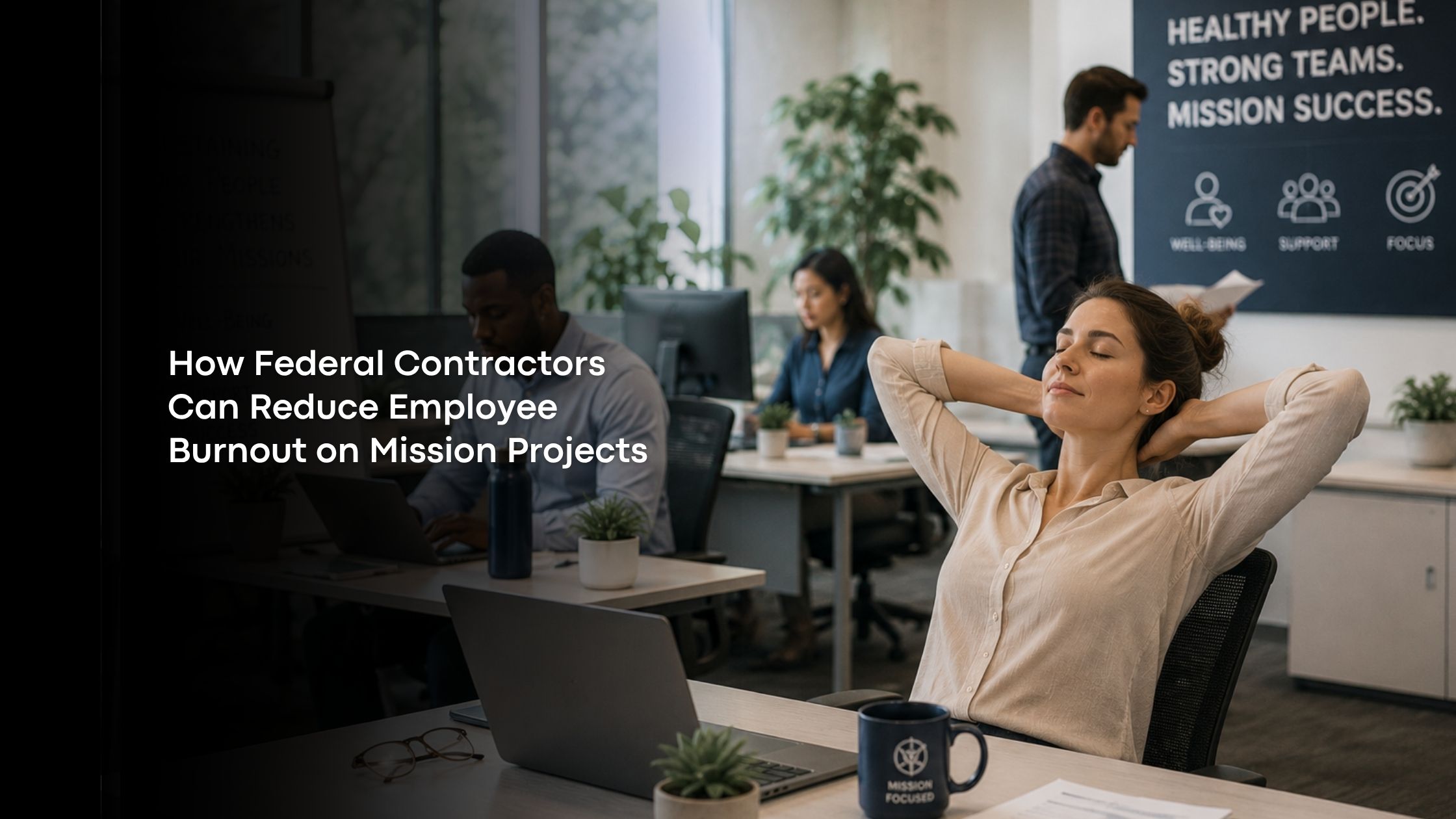
Federal missions are characterised by the need to meet tight deadlines, operate under stringent security constraints, and consistently deliver results despite the pressures involved. Although such missions are crucial to the country’s operations they also create a very demanding work environment that may cause fatigue among workers.
Fatigue causes low productivity and poor performance. Contractors who take a proactive approach to their workers’ health will perform better. Implementing effective federal workforce burnout management strategies helps employees maintain focus on their mission. This blog explores how federal contractors can reduce employee burnout on mission projects.
An Overview of Burnout in Federal Contracting
Burnout is not just about stress, it is a persistent condition of exhaustion involving the body, mind, and emotions brought about by chronic work-related pressures. Workers who engage in mission-oriented projects are expected to undertake delicate assignments, work with an uncertain schedule, and handle heavy record-keeping.
This may cause decreased motivation and increased frustration. It is necessary for federal contractors to understand that burnout affects not only individuals but also the organisation.
The Importance of Burnout Prevention in Federal Contracting
- Federal workforce burnout prevention helps employees become more productive and efficient in federal contracting settings.
- Healthy employees tend to be more accurate, thereby avoiding compliance and operational issues.
- Burnout prevention helps ensure that contractors meet tight government-set deadlines.
- Less stress leads to easy cooperation and communication between employees.
- Employees who feel motivated tend to provide quality services to government clients.
- A good workplace culture enhances the reputation of contractors among federal contractors.
- Programs related to mental well-being help employees cope with the challenges of federal projects.
- Burnout prevention ensures organisational resilience and contract success.
Ways Federal Contractors Can Reduce Employee Burnout on Mission Projects
- Identifying Early Indicators
One of the most effective ways to avoid burnout is by recognising its symptoms. The following are signs managers should look for in their staff members.
Some of the indicators include:
- Absence from work
- Lack of participation in meetings
- Making mistakes or missing deadlines
- Irritability
- Low productivity
- Inability to concentrate
Early recognition of these indicators by leaders can help prevent employee burnout.
- Constructing Practical Schedules for Projects
Mission projects usually have urgent deadlines, and unreasonable schedules will soon cause chaos among workers. The contractors need to develop schedules that account for workload distribution, potential delays, and available staffing.
Project managers should not assign continuous overtime to employees. They can divide the projects into small milestones and set realistic expectations. A practical schedule will help workers complete their jobs without pressure.
- Encouraging Open Communication
People feel more comfortable discussing their problems if the management has created an environment of trust and openness. It is important for the contractor to create an environment where people can speak freely about their work-related problems, including stress, workload, and other operational issues.
One-to-one meetings between employees and their managers will help managers understand what employees are thinking. Communication helps to foster a sense of teamwork and eliminates the fear of being criticised for needing help.
- Balancing Professional and Personal Life
Mission-oriented work environments can cause confusion about what is professional and what is personal. Employees who are always accessible outside of regular working hours can be subjected to emotional exhaustion. Federal contractors can prevent burnout by creating boundaries between work and personal life. These include,
- Flexible work hours
- Remote working where feasible
- Encouraging employees to go on vacation
- Reducing unnecessary out-of-hours contact
- Rotation of difficult tasks
Workers who get time to rest tend to come back more energised.
- Offer Mental Health Assistance
Mental health assistance is critical when preventing burnout. Workers engaged in handling federal projects will be exposed to anxiety, stress, or mental exhaustion. Contractors can help their workers remain mentally healthy by offering counselling services, stress management, wellness programs, and even employee assistance programs.
Mental health training for supervisors can help managers recognise signs of burnout among workers. An environment where workers discuss mental health issues will foster a healthier work environment.
- Offer Flexible Work Arrangements
A great deal of improvement can be experienced by employees working on mission projects through increased flexibility. While some federal contracts require workers to be physically present at their place of work, others allow more flexibility in their schedules.
Flexible scheduling can help workers better balance their work and personal lives. Federal contractors that adopt flexibility are known to have high employee satisfaction and stronger employee retention outcomes.
- Acknowledge and Appreciate Employee Efforts
Employees who work on mission-critical projects or contracts often face significant pressure when performing challenging tasks. Acknowledging their efforts helps to motivate them and makes them feel valued. Acknowledgement does not have to be in terms of money all the time.
It may take several other forms like recognition from the general public, advancement in one’s career, celebration by the team members, and performance incentives. Valued employees will remain committed and motivated to achieve their objectives.
- Build a Supportive Team Culture
Culture can make it easier for employees to manage challenging projects. Those who work together and support each other are less prone to isolation and frustration. Contractors at the federal level should have better cooperation and information sharing among employees.
This will build positive relationships in the workplace. A positive and supportive GovCon culture promotes high morale, collaboration, and keeps employees connected during high-pressure mission assignments.
- Promote Purpose and Mission Alignment
Many federal mission projects are associated with activities that directly affect the country’s national security, public services, healthcare, or infrastructure. Making employees realise the significance of their work will motivate them.
It is important for organisations to constantly emphasise the connection between employees’ efforts and government missions and social purposes. Employees who feel connected to their jobs will stay motivated even during difficult times. Mission-driven work environments tend to promote resilience.
Wrapping It Up
Avoiding burnout in mission-critical projects cannot be achieved through quick fixes alone. It is the responsibility of federal contractors to create an environment that promotes balance, provides their employees with the tools they need to be motivated, and ensures productivity.
Collaboration with industry professionals like GovCon helps companies to create effective federal workforce burnout strategies while maintaining high performance levels. It is easy for employees to work effectively without compromising their well being due to GovCon. Contact GovCon today to ensure your workforce can handle all mission-critical projects.